Knowledge Sharing Session Report – March 2024
The diversity of society has necessitated an awareness of a neglected group of people, individuals with hearing impairment. Despite being recognized, represented, or catered for in the community, these individuals continue to exist and thrive. The young, particularly students, feel marginalized and less understood in the situation. How might we drive awareness and improve learning conditions for these students?
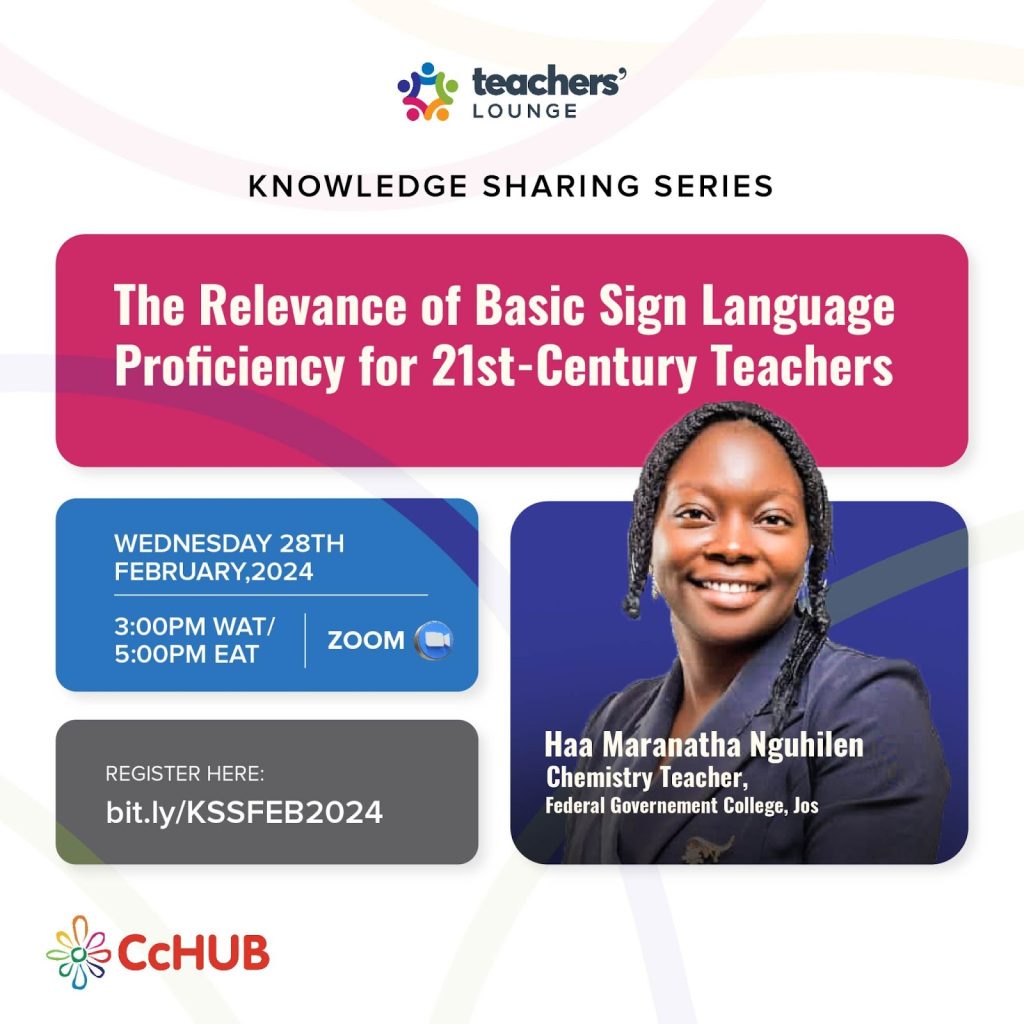
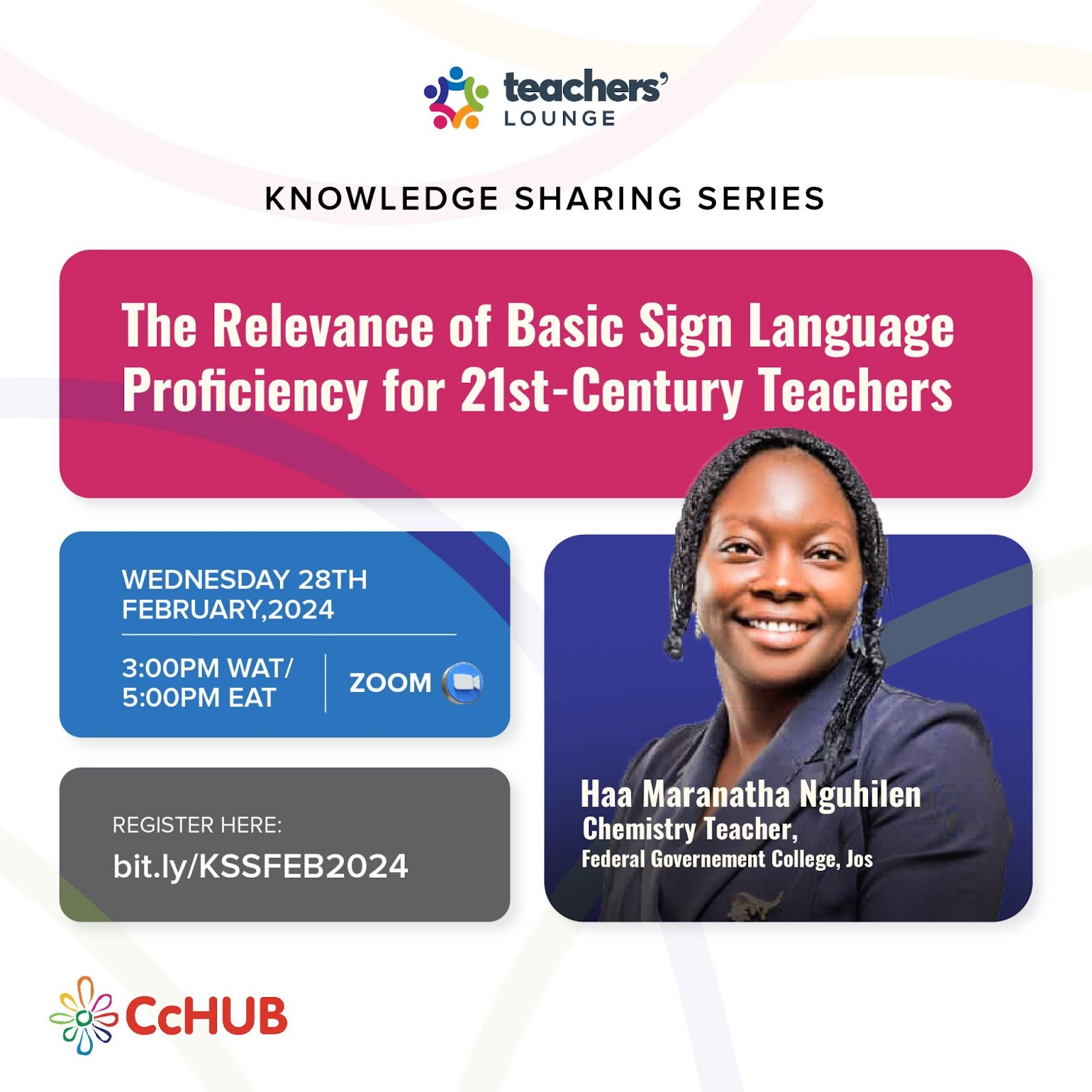
At the first edition of the Teachers Lounge Knowledge Sharing Session, Haa Maranatha a Chemistry teacher at Federal Government Jos, Deaf Science Educator and Advocate shared insights on the relevance of Basic Sign language Education for teachers. Sharing her experience relating with the young and old from the deaf community, she highlighted the peculiarities and challenges they face. This helped participants develop an interest in advocacy for the community.
Beginning her session she corrected the notion that this category of people were sick as they only have a hearing loss. She also made participants understand that individuals with hearing loss were not called deaf but hearing impaired and as such are communicated with Sign language. A means of communication using body movements, especially the hands and elbows. The formal Sign language used in Nigeria is the American Sign Language (ASL).

Sensitizing participants on the need to acquire basic sign language skills as 21st-century teachers she buttressed the importance of advocacy, as it empowers them to champion equal opportunities for all students. Maranatha also mentioned that demonstrating these skills helps teachers model acceptance and thus demonstrate openness and acceptance of diverse communication methods.
Surprisingly she opened the eyes of participants to career opportunities in Sign Language such as; Special Education consultant, Professional Interpreter, Curriculum Developer, Robotic Coach, Counselor, Music / Choreography Coach, and Science Educator. She shared several opportunities she had secured in the past as a result of her skills and volunteerism as a Deaf Science Educator.
Finally, she started participants off on their journey to acquiring basic sign language skills by drilling them on how to sign language for the 36 English alphabets. A teacher who spelled her name well using sign language was awarded a recharge card.
Without a doubt, the knowledge of these skills promotes inclusivity, better communication, and helps build better relationships with the hearing impaired. This gives them a sense of belonging and eases the burden of their impairment.
Meeting Analysis
The Knowledge Sharing Session was attended by 25 teachers from all across Nigeria but predominantly Lagos. 76.5% of the participants were science teachers while 23.5% were Non-Science teachers. This shows that science teachers are not interested in basic sign language skills.

Satisfaction Rate/Relevance
On satisfaction rate, 52.9% of participants were very satisfied with the topic, content, and delivery of the speaker while 47.1% of participants were satisfied. On the other hand, 94.2% of participants found the session extremely and very valuable while 5.9% of participants found the session moderately valuable This shows that all participants found the session relevant.

Satisfaction Rate

Relevance of the session
Learning Implementation
When asked how soon they would implement the learning from the session, 58.8% of participants said they would immediately, 35.3% of participants said they would implement it soon while a lesser percentage 5.9% of participants said they would need further training to implement it.

Learning Implementation
Leave a Reply