
In March 2025, a diverse group of industry leaders and community advocates gathered at the Digital Literacy Forum 2025 to explore how we can create a more inclusive digital future. The event was held in commemoration of Safer Internet Day under the theme “A Better Internet for All”, as it brought together 40 passionate participants from cybersecurity backgrounds to discuss and share ideas about improving digital literacy online safety for everyone, especially our senior citizens.

The forum began with an inspiring talk by Sade Dada, Head of Public Policy for Meta in Anglophone West Africa. With genuine enthusiasm, Sade shared META’s vision for a future where Nigeria achieves 95% digital literacy by 2030. She spoke on the importance of empowering communities through targeted digital education, sharing the success of initiatives like META’s digital skills workshops and online safety programs that have reached more than 200,000 people. Her words resonated with the audience, reminding everyone that when communities are equipped with the right tools and knowledge, they can overcome even the toughest challenges.

The conversation soon evolved to discuss to the unique challenges faced by vulnerable populations. Adesola Oguntimeyin, Founder of Cyber Patron Network, offered a fresh perspective on the risks older adults face as they increasingly rely on digital platforms for social connection, managing finances, and accessing healthcare. She shared the need for comprehensive and accessible digital literacy programs that blend strong government guidance with community-driven initiatives. Her challenge to the forum was both direct and thought-provoking.
“What’s one practical step we can take today to ensure senior citizens are safer online?”
Her call urged every stakeholder to reflect on immediate, tangible actions that could mitigate cyber scams, phishing, and identity theft, reminding us that digital safety is an urgent and shared responsibility.
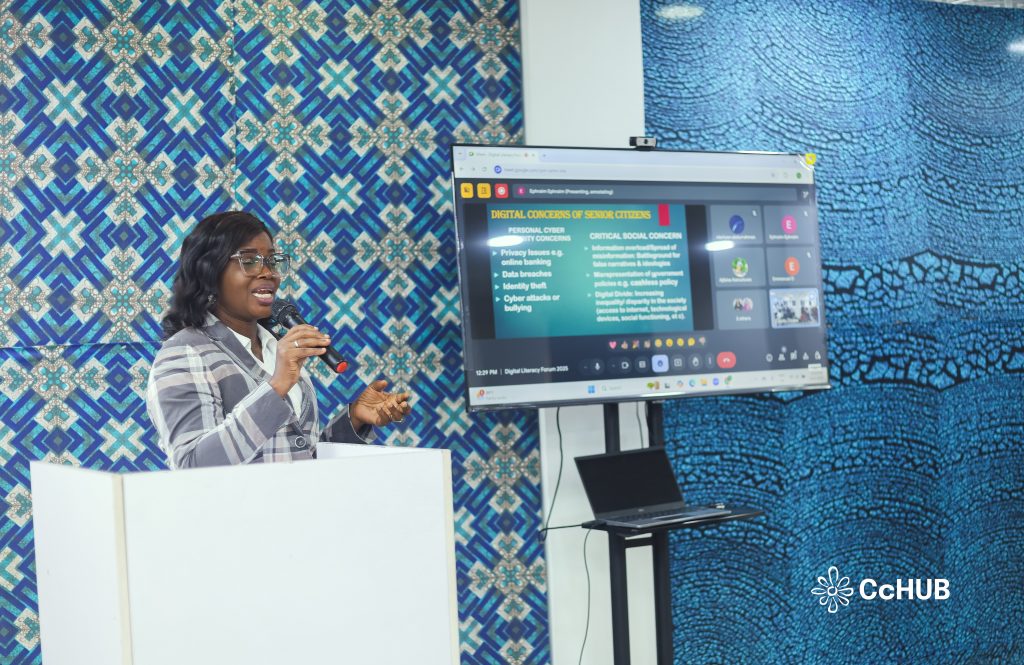
Dr. Ronke Adeduntan, a lecturer at the University of Lagos and a senior citizen, presented the perspective of older adults under the topic “Together for a Better Internet: Digital Safety for Senior Citizens.” She spoke about the digital challenges senior citizens face, such as difficulties keeping up with technological change, reduced vision and hearing, and the risk of misinformation and identity theft. She emphasized the need for greater support from government and NGOs, particularly through continuous training and inclusive education.
“Continuous digital training and literacy in local languages are essential for navigating the digital world,” she noted.
Her presentation underscored the importance of bridging the digital divide by equipping seniors with the tools and confidence to participate meaningfully and safely online.
Professor Abdulsalam Ya’u Gital, Dean of the Faculty of Computing at Abubakar Tafawa Balewa University in Bauchi, discussed the digital divide in Nigeria’s rural northern regions. He explained that inadequate connectivity and limited access to training leave elderly residents vulnerable. He highlighted how NGOs are making efforts to provide digital skills training but noted that more support is needed, especially for people with disabilities and those in agriculture. He called for improved infrastructure, the integration of assistive technologies, and collaboration among government and non-governmental bodies to ensure digital inclusion for all.

One of the most engaging parts of the day was the co-creation session, where participants broke into small groups to brainstorm practical ways to improve digital inclusion. These discussions focused on accessible design, localized training, and the development of inclusive policies. Some ideas included customizable digital interfaces, community-based support centers, cybersecurity education tailored to seniors, and multilingual training materials.
Based on the discussions during the co-creation session, the following were identified as key recommendations to cybersecurity organizations, policymakers, and digital literacy/online safety advocates:
- Embed advanced features behind clean, intuitive interfaces. These include adjustable font sizes, simplified menus, high-contrast visuals, and voice or gesture controls. Seniors and vulnerable users should be involved in testing, and features should be introduced gradually to avoid overwhelm.
- Offer structured, hands-on, in-person training at community and senior centers and online. This should include one-on-one support, peer mentoring, and culturally relevant learning materials in local languages.
- Build strong public–private partnerships by aligning government policies, such as incentives for accessible design, with the innovation capabilities of tech companies. Platforms should be created for NGOs, universities, and community organizations to co-develop and pilot solutions.
- Incentivize the development of senior-friendly tools. This could include developer grants, awards, and public recognition for technologies that improve access and usability for older adults.
- Launch targeted cybersecurity and misinformation campaigns, including scenario-based learning. These should teach seniors how to detect scams, verify information, and protect their digital identities.
- Establish localized support mechanisms such as help desks, volunteer-staffed hotlines, and community accountability structures. These should ensure that infrastructure like electricity and internet access reaches underserved areas.
If you would like to join our Digital Literacy Community of Practice, click here and become part of the movement building a safer digital world for all.
Leave a Reply